
No Doubt, The Pentagone is Addicted to Anthropic
By blacklisting the world’s most advanced AI company, the Trump administration has given in to a reflex of political vendetta at a critical moment for U.S. defense.

In short
-The Trump administration’s decision to designate the AI behemoth Anthropic a “high-risk supplier” immediately triggered serious concern within the US military, which uses it daily.
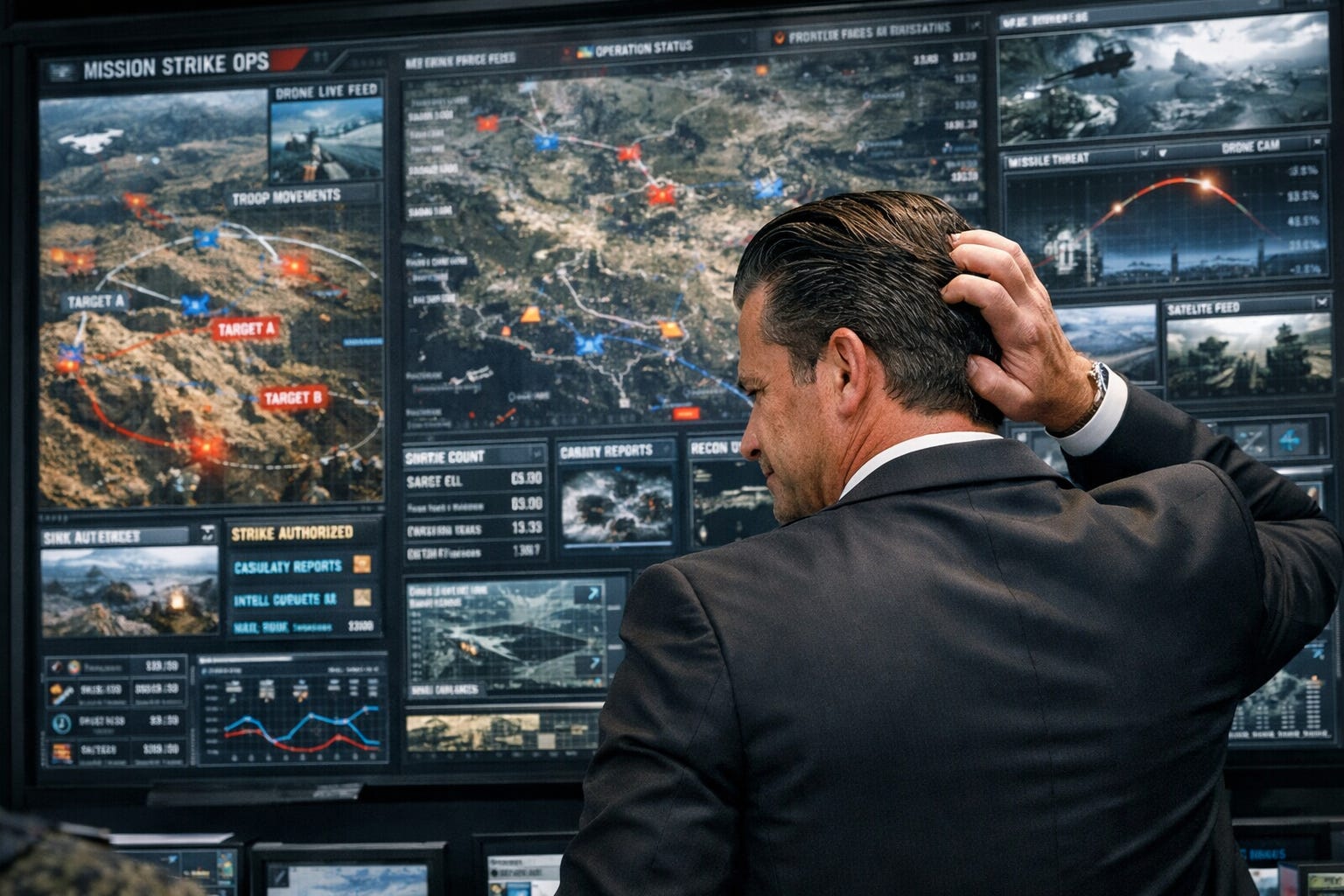
- The sanction barring the company from direct government work is disconnected from operational reality, as Anthropic plays a critical role in the Pentagon’s AI-powered targeting architecture.
-Replacing such a system in the middle of active military operations is nearly impossible on any meaningful timeline. The administration’s six-month deadline to “disconnect” borders on fiction.
-The Pentagon narrative framing Anthropic as being controlled by “pacifists” misaligned with U.S. interests collapses under scrutiny.
The whole story
Bad timing. As the United States launches a massive military operation against Iran, the Trump administration has dealt a serious blow to its own “algorithmic warfare” capabilities by designating Anthropic, the generative AI behemoth, as a “high-risk supplier.”
The decision immediately triggered quiet but real concern within the military, where Anthropic’s tools are used daily. More damaging still, the courts intervened. On March 26, a federal judge struck down the exclusion order issued by the White House and the Pentagon. Judge Rita Lin found that the Pentagon’s actions “do not appear to be directed at the government’s stated national security interests. Instead, these measures appear designed to punish Anthropic.”
She further noted that the move likely violates the First Amendment, which protects freedom of expression for both individuals and organizations.

A conflict over surveillance—and limits
At its core, the dispute can be reduced to one phrase: “analysis of bulk acquired data.”
Anthropic refused to grant the Pentagon a blank check for the use of its models in analyzing commercially acquired datasets—information purchased by U.S. intelligence agencies (CIA, NSA, DIA) from a vast ecosystem of data brokers monetizing personal data. This includes browsing histories, search records, and social media activity. In a notable show of support, Microsoft—deeply intertwined with the Pentagon through its secure cloud infrastructure—has signaled it will continue working with Anthropic on non-defense programs.
The subtext is clear: the balance of power does not lie with the Pentagon.
After weeks of negotiations with the Department of War, Anthropic drew a line.
Its position on mass domestic surveillance is unambiguous:
“We support the use of AI for lawful foreign intelligence and counterintelligence missions. But using these systems for mass domestic surveillance is incompatible with democratic values…”
The company’s concern is structural: AI now makes it possible to assemble fragmented, seemingly harmless datasets into comprehensive, real-time portraits of individuals—at massive scale. What is legally permissible today reflects the lag of law behind technology, not a settled democratic consensus.
Anthropic has taken a similarly cautious stance on fully autonomous weapons. While acknowledging their potential strategic importance, the company argues that current frontier models are simply not reliable enough to remove humans from the loop in lethal decision-making.
“We will not knowingly provide a product that puts America’s warfighters and civilians at risk.”
A sanction detached from operational reality
The sanction, confirmed on March 5 by Secretary of War Pete Hegseth, places Anthropic on a blacklist of companies deemed risky to U.S. national security.
In theory, this bars the company not only from direct government work but also from contracts with third parties serving the military—a sweeping restriction that touches much of the U.S. tech ecosystem.
Yet the move is disconnected from operational reality. Anthropic is deeply embedded in U.S. military systems—most critically through its role in the Maven Smart System, the Pentagon’s AI-powered targeting architecture developed by Palantir.
Maven ingests 179 real-time data streams to identify, classify, and prioritize targets, and to orchestrate complex operational packages. It determines which aircraft to deploy, with what payloads, from which bases; sequences electronic warfare support; coordinates aerial refueling; and anticipates contingency scenarios such as search-and-rescue operations.
All of this must be synchronized to the minute. A delay in carrier operations, a change in intelligence, or a supply issue is instantly integrated into the system, triggering cascading adjustments across the entire kill chain.
A decade ago, such planning took days or weeks and relied on often outdated intelligence. Today, it is executed in hours—and continuously updated in real time.
This is only possible through large-scale AI. And Anthropic sits at the core of that capability.
Replacing such a system in the middle of active operations—across Iran, but also Yemen, Syria, Africa, and beyond—is not just difficult. It is close to impossible on any meaningful timeline. The administration’s six-month deadline to “disconnect” Anthropic from Maven borders on fiction.

A narrative at odds with facts
The Pentagon has framed Anthropic as ideologically unreliable—controlled by “pacifists” misaligned with U.S. interests.
This narrative collapses under scrutiny.
For years, Anthropic has worked closely with the U.S. military and intelligence community. Its CEO has repeatedly emphasized that the company was the first frontier AI firm to deploy models within classified government networks, national laboratories, and mission-critical defense applications—from intelligence analysis to cyber operations.
The company has also taken concrete steps aligned with U.S. strategic interests, including cutting off access to actors linked to the Chinese Communist Party, shutting down attempted misuse of its systems, and advocating for tighter export controls on advanced chips.
This is not the profile of a reluctant defense partner.